
Train Accident Reveals Existence of Massive Bat Feces Supply Chain
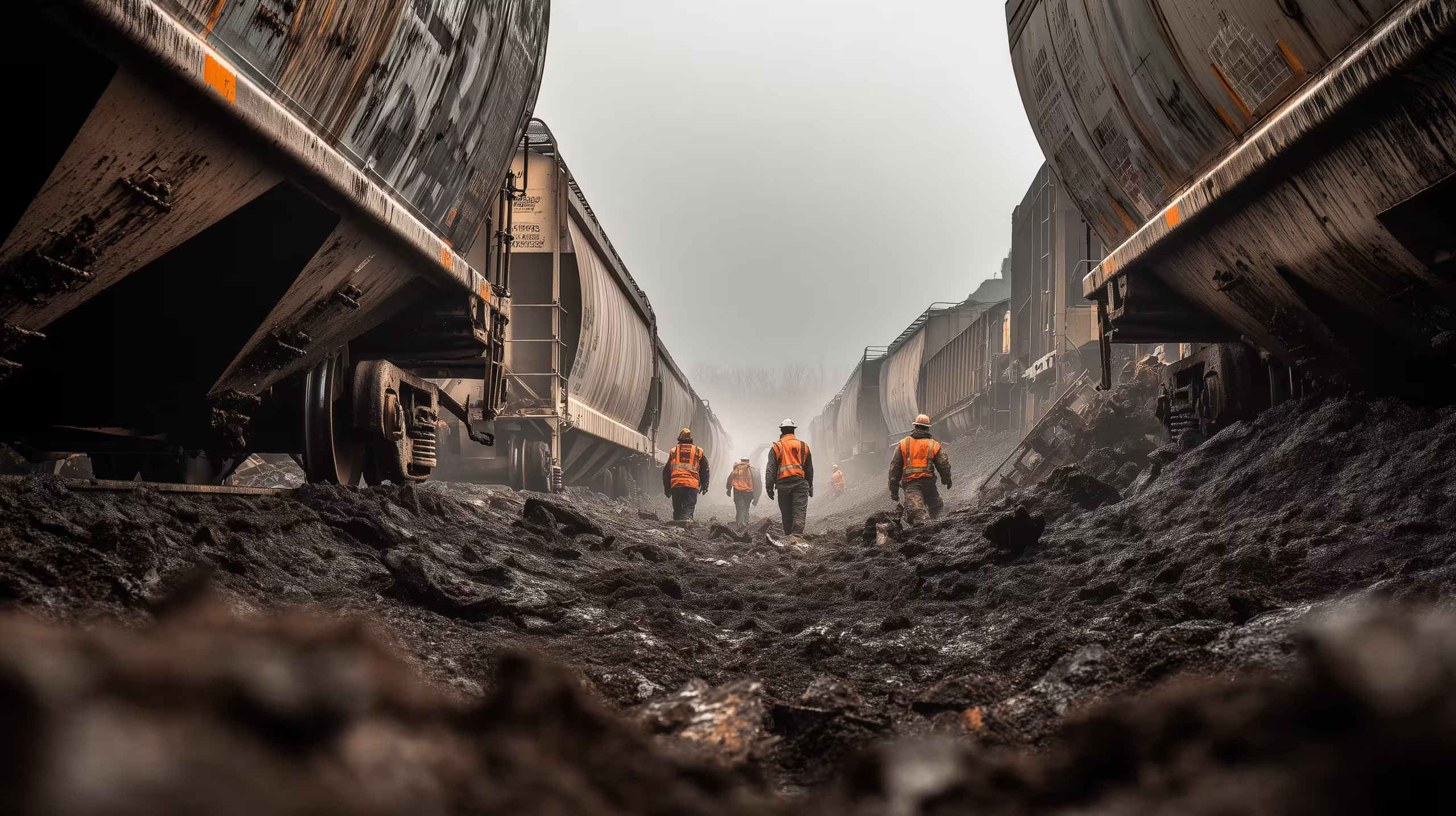
Authorities confirmed Tuesday that a freight train carrying approximately 1,200 tons of bat feces derailed just outside rural Allegheny County, briefly interrupting rail traffic, emergency response schedules, and the collective emotional stability of everyone involved.
The derailment occurred at approximately 3:17 a.m. when several cars left the tracks near a wooded stretch of land previously known for deer, silence, and an almost aggressive lack of bat-related commerce. No injuries were reported, though emergency responders acknowledged that several personnel requested reassignment after learning the true nature of the cargo.
“At first we thought it was coal,” said one fire official at the scene. “Then we got closer. Then we stopped getting closer.”
By sunrise, the site had been secured with caution tape, hazmat signage, and an unspoken agreement not to ask unnecessary follow-up questions until everyone had finished processing what they were standing next to.
The Immediate Question: Why Is This a Thing?
While train derailments are not uncommon, officials conceded that this incident raised a more fundamental issue: why a single train was transporting more than a thousand tons of bat feces in the first place.
According to shipping manifests reviewed by BCBC, the cargo consisted of processed bat guano harvested from multiple cave systems across the southwestern United States, consolidated at a regional processing facility, treated, packaged, and prepared for long-distance transport.
Prepared for what, exactly, remains unclear.
“Bat guano has legitimate uses,” said Department of Transportation spokesperson Elaine Rourke. “Agriculture, industrial applications, soil enrichment. There are reasons this material exists in commerce.”
When asked whether those reasons justified an entire freight train, Rourke paused.
“That’s more of a volume question,” she said.
A Supply Chain Nobody Noticed Until Now
Logistics experts say the derailment has drawn attention to a supply chain most Americans were never meant to think about.
“This doesn’t happen accidentally,” said Martin Keller, a transportation analyst specializing in bulk commodities. “There are contracts. Schedules. Routing decisions. Someone ordered this. Someone approved it. Multiple meetings occurred.”
Keller explained that rail transport is the most efficient way to move large quantities of guano without requiring dozens of truck drivers to fully confront what they are hauling.
“Rail allows emotional distance,” he said. “You don’t have to look at it. You just know it’s there.”
Internal documents suggest the shipment originated from a processing hub that aggregates bat waste from dozens of cave systems before redistributing it nationwide. When asked how many such shipments occur annually, a facility spokesperson replied, “More than people are comfortable hearing.”
Residents Describe a Smell They Will Now Carry Forever
Nearby residents reported learning of the derailment not through official alerts, but through a sudden and unmistakable change in the air.
“It was like the atmosphere itself made a decision,” said homeowner Linda Morales, who lives less than a mile from the site. “I closed my windows, lit a candle, and immediately realized none of that mattered.”
County health officials stated that while processed guano is not classified as hazardous waste, prolonged exposure to airborne particles is “suboptimal” and “not something you want to research in real time.”
Officials Reassure Public That Situation Is ‘Contained,’ Conceptually
At a press conference later that morning, state officials emphasized that the spill was under control.
“The material is where it is,” said Environmental Response Coordinator Thomas Whitby. “And our goal is to keep it there.”
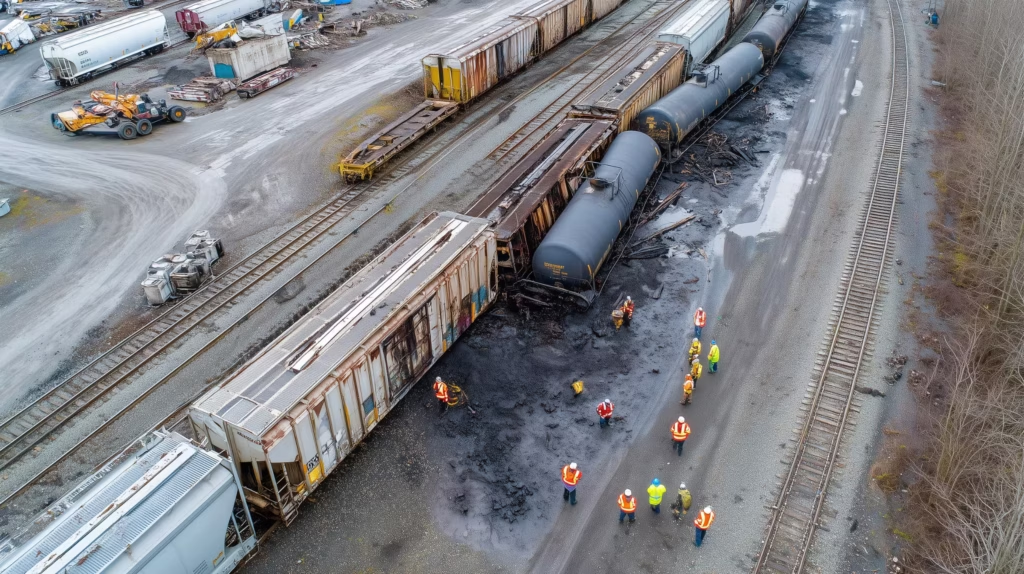
Whitby confirmed that cleanup crews were removing guano by the ton, though he acknowledged that “removal” was a generous term.
“You don’t really remove something like this,” he said. “You relocate it. Slowly. With machines.”
When asked how long cleanup would take, Whitby said the timeline depended on weather, equipment reliability, and how quickly everyone involved could stop thinking about the broader implications.
Experts Attempt to Explain the Scale
Environmental scientists were brought in to contextualize just how much bat feces 1,200 tons actually represents.
“It’s difficult to visualize,” said Dr. Harold Nguyen, a professor of environmental systems. “But imagine every bat you’ve ever seen. Now imagine their entire lives. Now imagine decades of accumulation, optimized for transport.”
Nguyen noted that the scale alone suggests institutional demand.
“This isn’t artisanal,” he said. “This is industrial.”
Industry Insists This Is Normal, Which Does Not Help
Representatives from the agricultural sector issued a statement urging calm.
“Bat guano is a natural fertilizer used worldwide,” the statement read. “Its transport at scale reflects modern agricultural efficiency.”
Residents noted that while the statement was technically reassuring, it failed to address the emotional shock of discovering that this volume of bat feces exists, moves, and occasionally derails.
Cleanup Crews Face Psychological Challenges
Workers on-site described the cleanup as physically manageable but mentally taxing.
“Every scoop reminds you this came from somewhere,” said one contractor. “And that somewhere was alive.”
Mental health counselors were made available to crews as a precaution, though officials stressed this was “standard procedure” and “not an admission of anything.”
Transportation Officials Reevaluate Routing Policies
The incident has prompted renewed discussion about rail routing transparency.
“We may need a new category,” said one rail official. “Not for hazardous materials. For emotionally disruptive ones.”
A proposal to notify communities when trains carrying large quantities of guano pass through was briefly considered before being quietly abandoned.
“Nobody wants that email,” the official admitted.
Online Reaction Spirals Predictably
News of the derailment spread quickly online, with reactions ranging from disbelief to grim fascination.
“There are things I didn’t need to know existed at scale,” one post read. “This is one of them.”
Others questioned what similar shipments might be moving unnoticed.
“If this is happening,” another user wrote, “what else is rolling past us at 70 miles an hour?”
What Happens Next
As cleanup continues, officials stress that there is no ongoing danger to the public, though they acknowledged that the event has permanently altered how some residents think about trains.
Rail service is expected to resume once the site is cleared, sanitized, and collectively forgotten.
“This was an unusual situation,” Whitby said. “But everything worked as designed.”
He paused.
“Which may be the most concerning part.”
